Clear Land and Leave Nutrients Behind
Forestry mulching services in Louisville, Georgia for wooded and overgrown properties.
When your property in Louisville is covered with thick brush, saplings, or small trees, traditional clearing methods often involve cutting, piling, and hauling debris off site. Forestry mulching offers a different approach by grinding vegetation into mulch that stays on the ground, reducing hauling costs and leaving behind material that helps control erosion and regrowth. McMillan Clearing&Excavation provides forestry mulching throughout Louisville for wooded and overgrown properties that need clearing without the disruption of heavy debris removal.
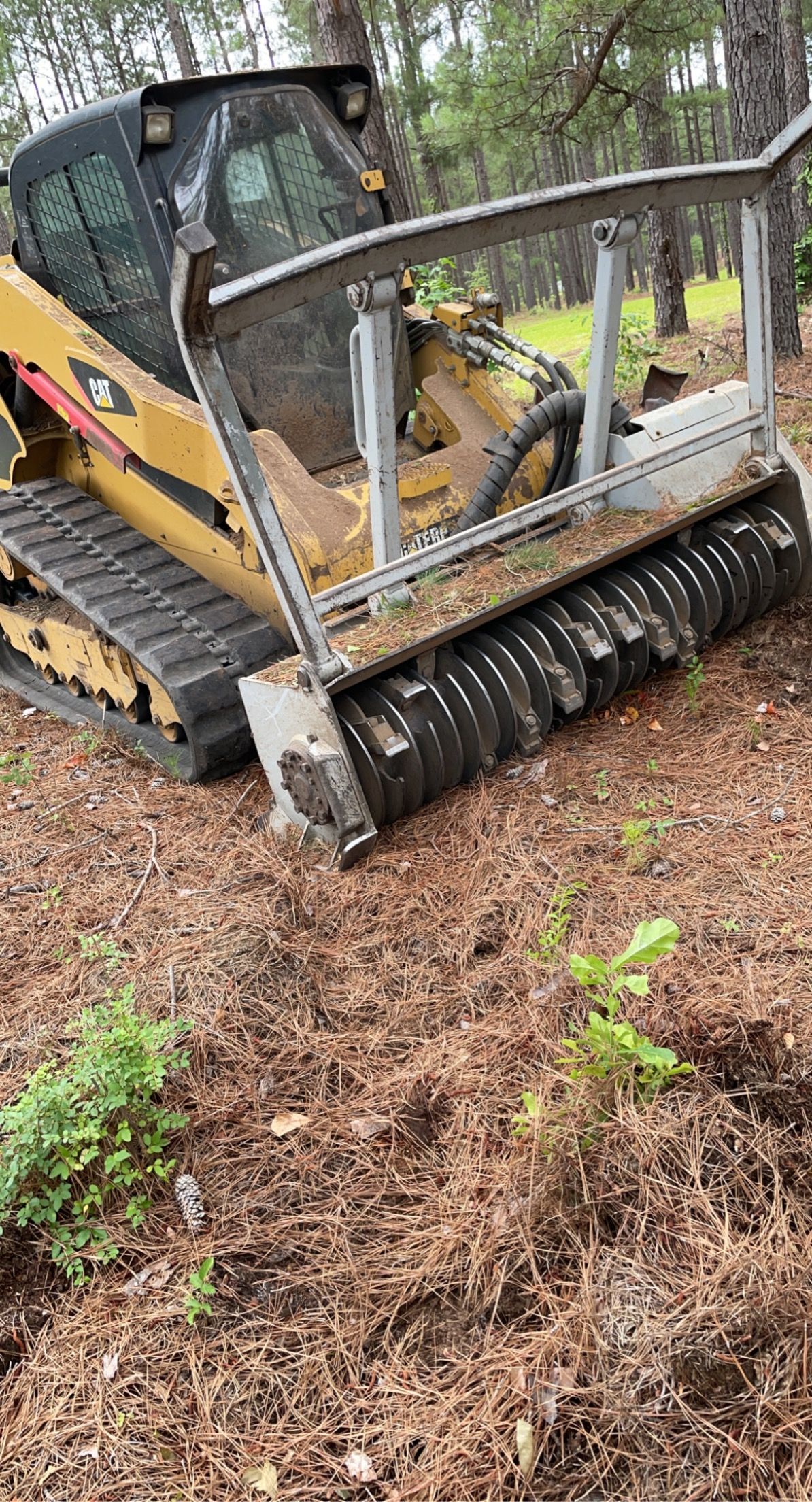
This service uses a mulching head attachment to grind trees, brush, and undergrowth into small chips that are spread evenly across the cleared area. The mulch layer helps control regrowth by blocking sunlight and adds organic material back into the soil as it breaks down. It is an environmentally conscious alternative to traditional clearing and works well on properties where hauling is difficult or where you want to maintain some ground cover.
If you have overgrown land in Louisville and want to clear it without multiple truckloads of debris, contact us to discuss whether mulching is a good fit.
How Mulching Clears and Conditions the Land
Forestry mulching in Louisville begins with assessing the density and size of vegetation on your property. A skid steer or excavator equipped with a mulching head grinds through brush, small trees, and undergrowth, leaving behind a layer of shredded material. The process is efficient and reduces the need for cutting, stacking, and hauling that traditional clearing requires.
Once the work is finished, you will see open ground covered with a layer of wood chips instead of bare soil. The mulch settles over time, breaks down into organic matter, and helps prevent new growth from sprouting as quickly. The cleared area is accessible, visually clean, and better protected from erosion than land that has been stripped completely bare.
Forestry mulching is ideal for wooded properties, fence line clearing, trail creation, and firebreak installation. It does not remove stumps or large trees, and it works best where the goal is vegetation control rather than total land clearing. The mulch layer can be left in place or graded over depending on your plans for the property.
Landowners in Louisville considering forestry mulching often ask similar questions about how the process works and what the property will look like afterward.
What You Should Know Before Mulching Begins
If your property in Louisville is overgrown and you want a clearing method that leaves nutrient-rich mulch behind, McMillan Clearing&Excavation can assess the vegetation, explain how the process works, and complete the job with minimal disruption. Get in touch to schedule a site visit.